Godly Love in Couture Capsules: Divine Threads
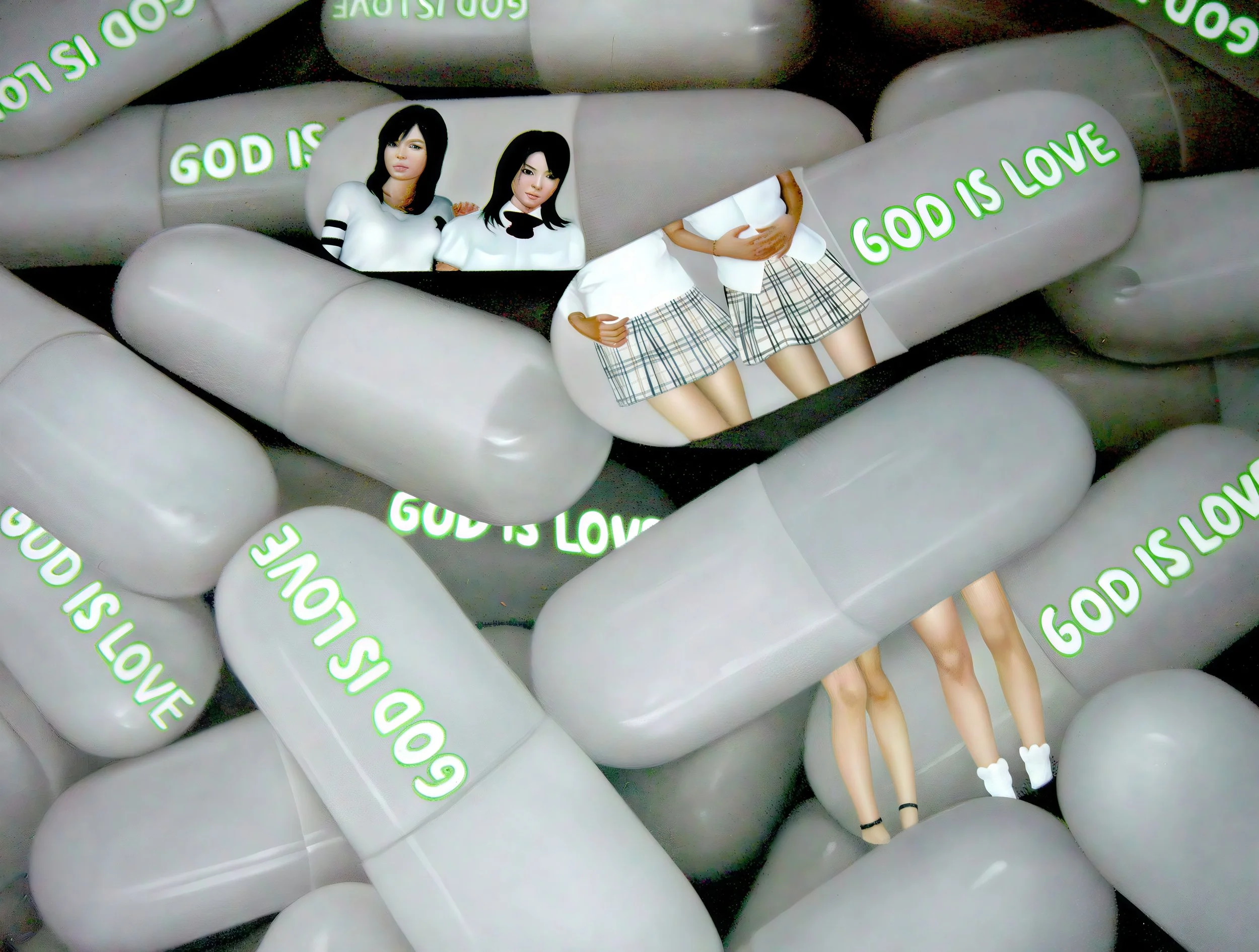
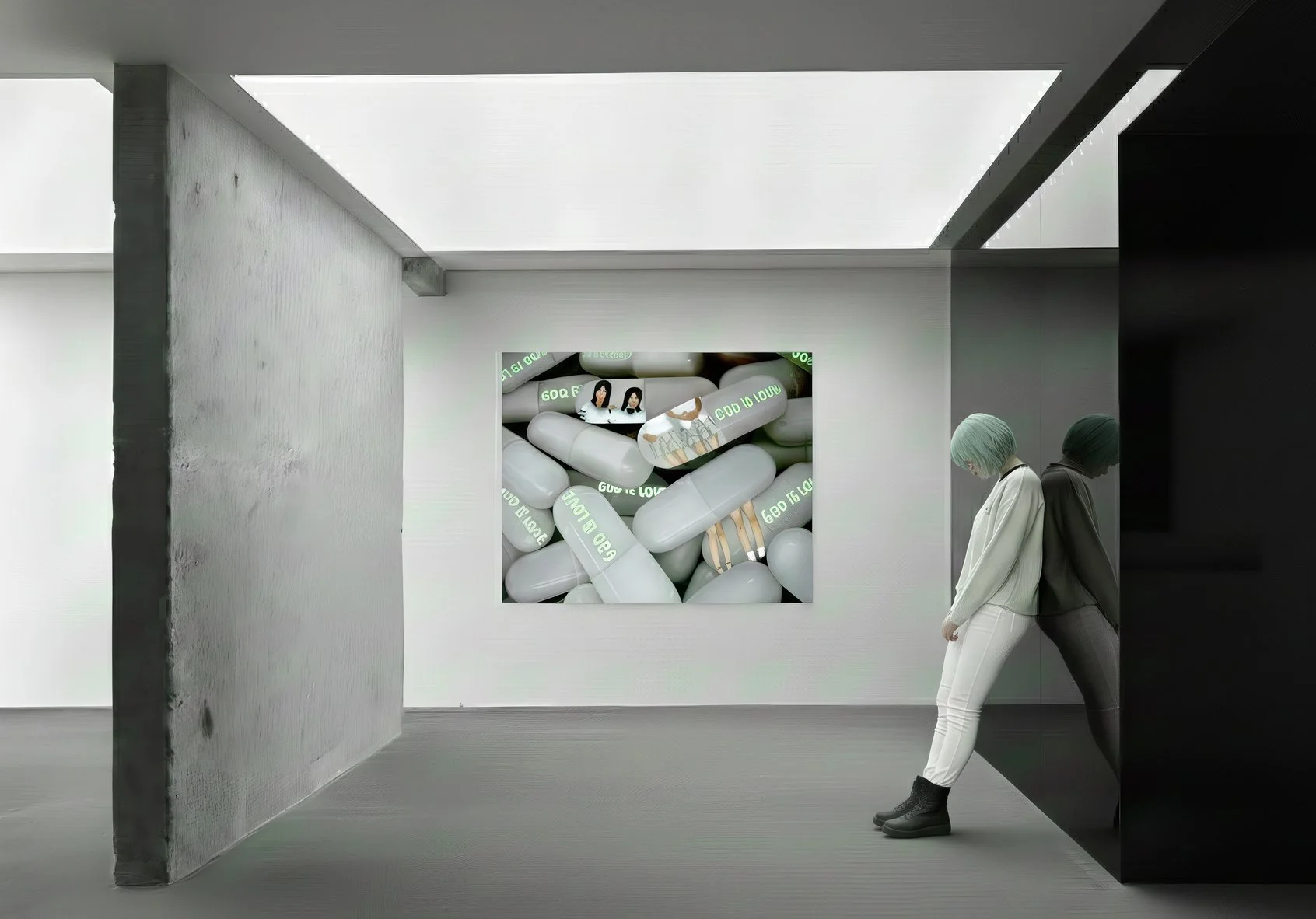
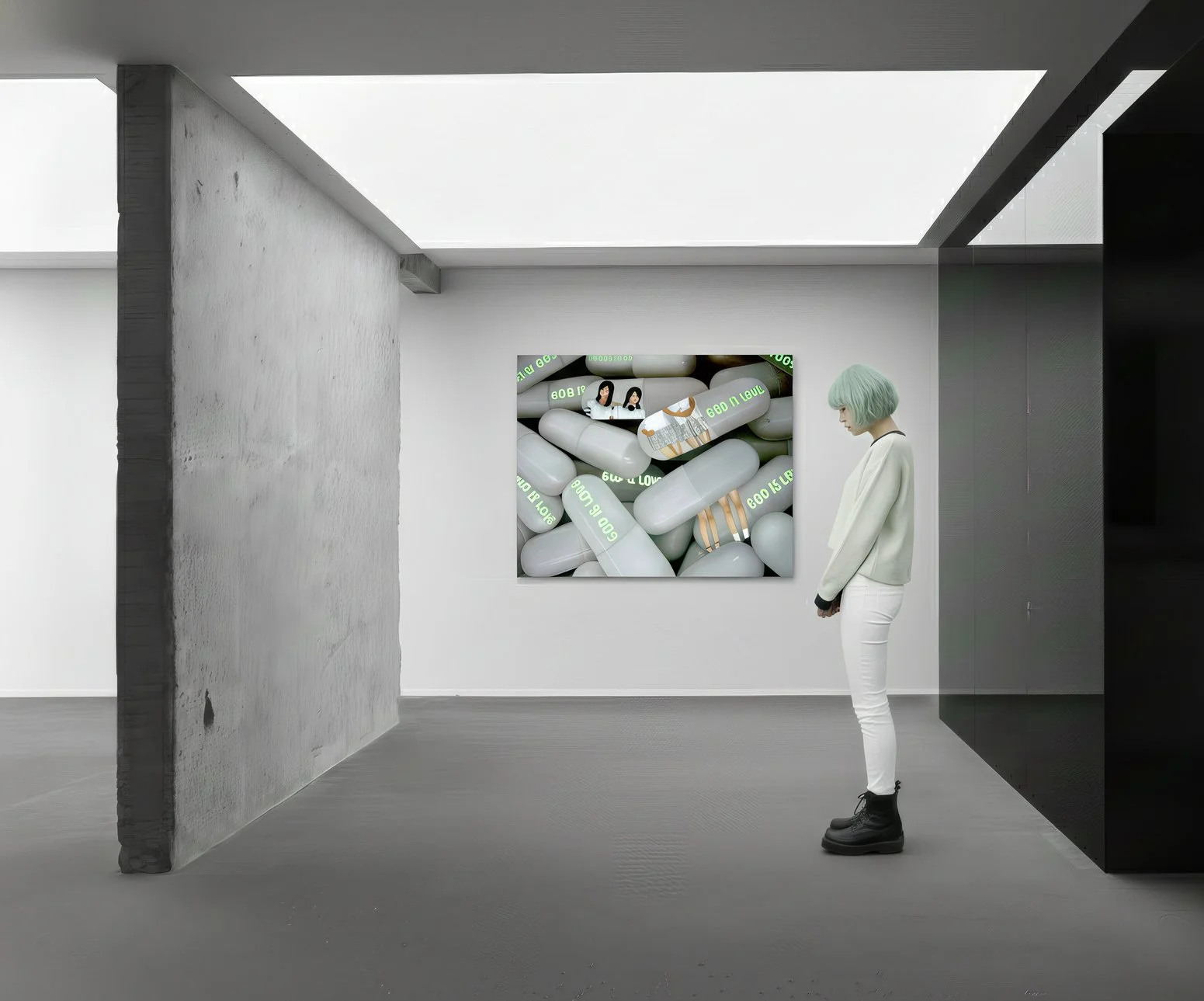
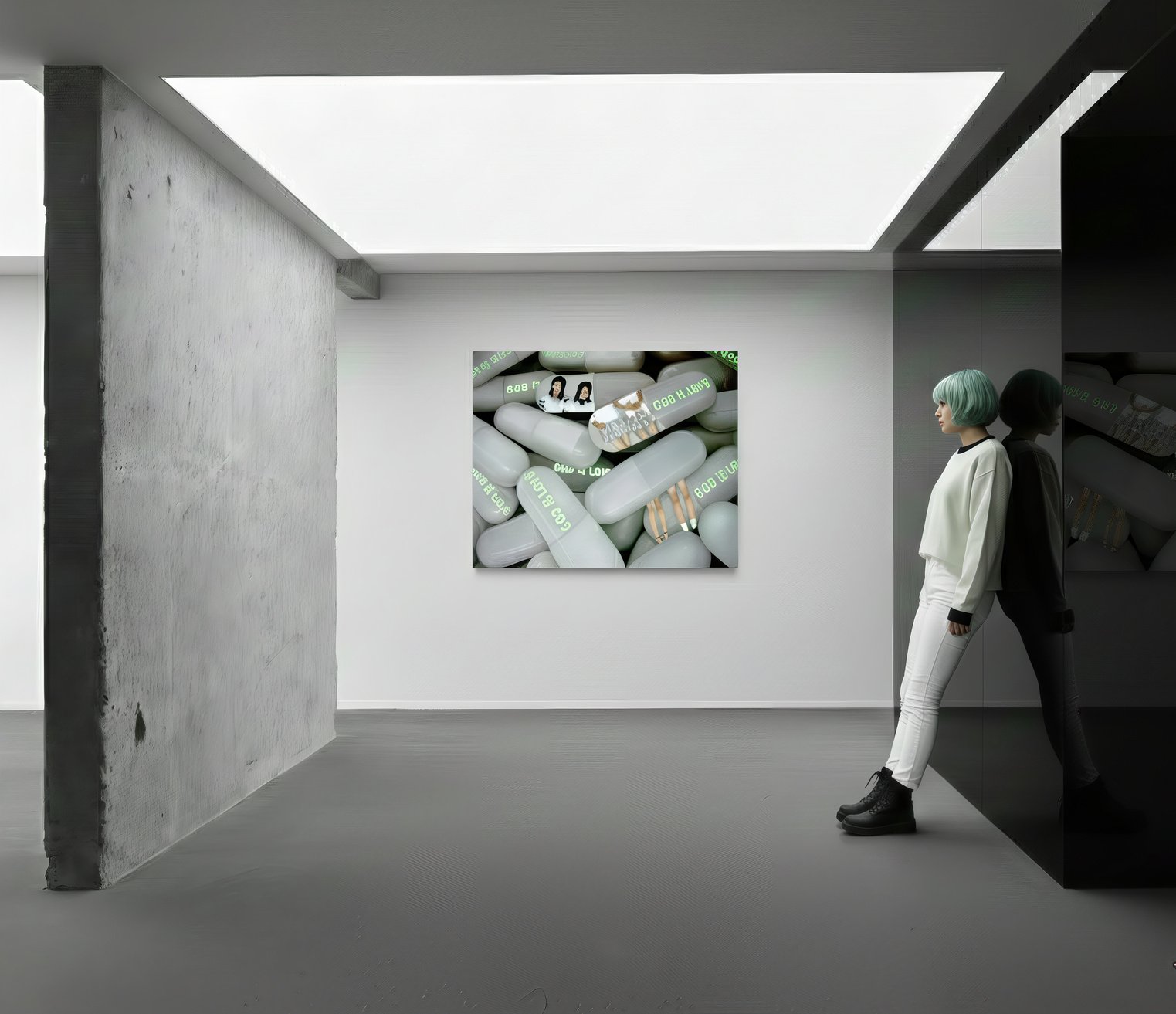
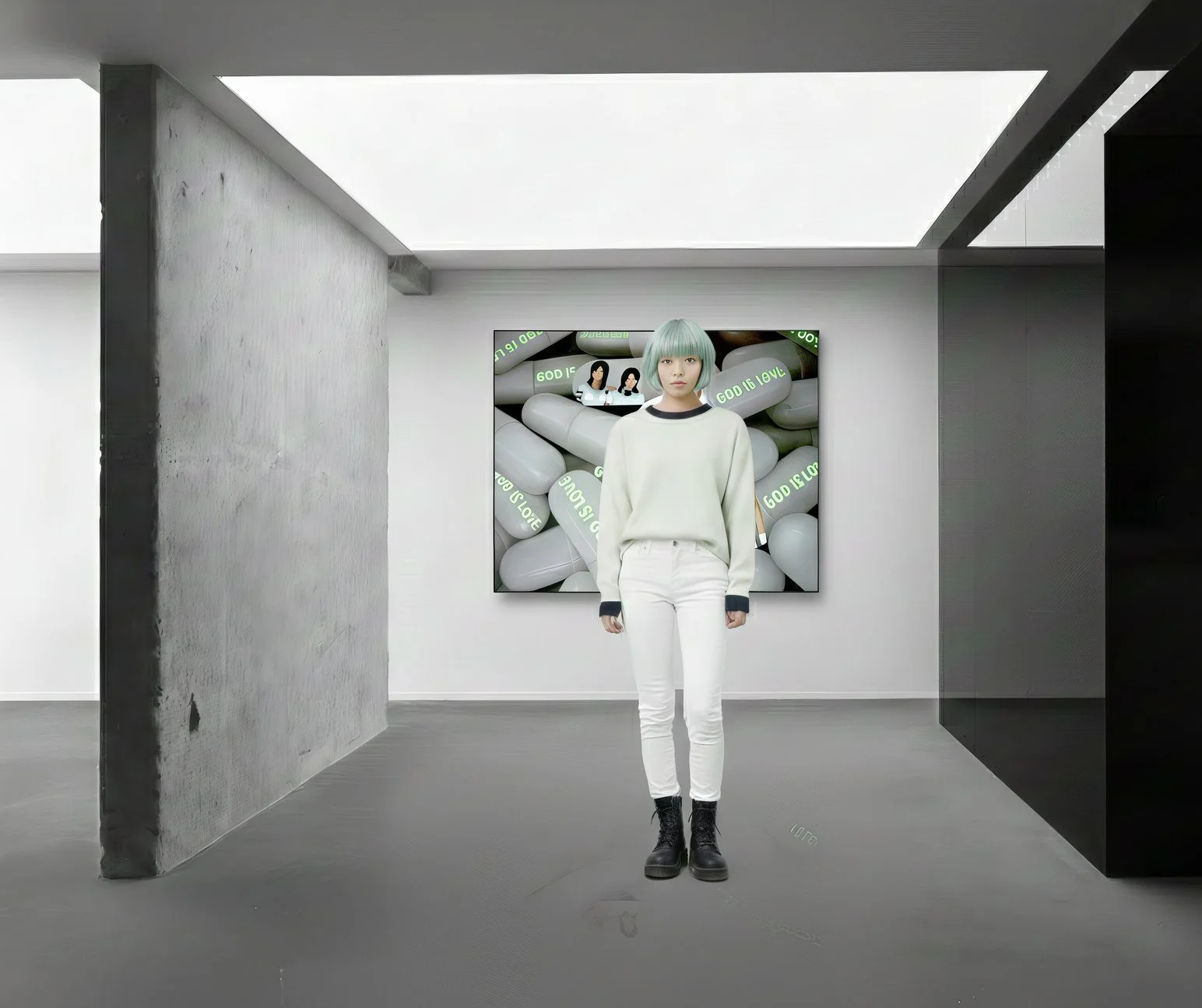

Godly Love in Couture Capsules: Divine Threads is one of the most conceptually ambitious works created by Tomomi Mishima within her celebrated Couture Capsules: Fashioning Tradition with Neon Elegance series. Combining spirituality, fashion culture, pharmaceutical symbolism, and contemporary visual language, the painting offers a compelling reflection on how modern societies construct meaning, desire, and emotional fulfillment. Through a sophisticated Neo-Pop vocabulary, Mishima examines the increasingly blurred boundaries between faith, consumption, and personal identity.
The composition is dominated by an expansive field of pharmaceutical capsules that extends across the pictorial surface like a contemporary landscape. Repeated in dense formations, these capsules create a visual environment that is simultaneously seductive and unsettling. Their presence evokes modern systems of emotional regulation, consumer behavior, and the desire to manage uncertainty through external solutions. Within Mishima’s artistic universe, the capsule becomes more than a medical object; it transforms into a symbol of contemporary culture itself, reflecting the mechanisms through which experiences, aspirations, and even emotions are packaged and distributed.
At the center of the composition appears the luminous phrase “God is Love,” rendered as a glowing neon sign. This striking intervention immediately transforms a familiar spiritual message into a contemporary visual statement. The use of neon introduces a deliberate ambiguity. Traditionally associated with advertising, commerce, and urban nightlife, neon recontextualizes the spiritual message, encouraging viewers to question how sacred values are communicated and consumed within modern society. The phrase appears both devotional and commercial, sincere and theatrical, creating a tension that lies at the heart of the work.
Scattered throughout the composition, female figures emerge from within the capsule environment. Inspired by Japanese youth culture and fashion aesthetics, they appear suspended between innocence and transformation, spirituality and material aspiration. Their restrained presence contrasts with the intensity of the surrounding imagery, suggesting individuals navigating a world where personal identity is increasingly shaped by external influences, visual culture, and social expectations.
The painting’s chromatic structure further reinforces its conceptual complexity. Soft pinks, luminous greens, and vibrant accents generate a dreamlike atmosphere that oscillates between serenity and unease. This visual seduction invites viewers into the work while simultaneously encouraging deeper reflection on its symbolic content. Mishima’s ability to combine beauty with critical inquiry remains one of the defining characteristics of her practice.
As an important member of Studio CrazyNoodles, the influential artistic collective founded by Hiro Ando, Tomomi Mishima occupies a unique position within the Japanese Neo-Pop movement. Her works consistently explore the psychological and emotional dimensions of contemporary life while maintaining the visual impact associated with Neo-Pop aesthetics. Godly Love in Couture Capsules: Divine Threads exemplifies this approach, offering a powerful meditation on spirituality, desire, and the evolving ways individuals search for meaning in an increasingly commercialized world.
Godly Love in Couture Capsules: Divine Threads, 2007
Materials Oil on stretched canvas
Size 51 1/5 × 59 1/10 × 1 1/5 in | 130 × 150 × 3 cm
Rarity Unique
Medium Painting
Condition Preserved in pristine StudioCrazynoodles condition
Signature Hand-signed by the artist - StudioCrazynoodles stencil emblem on the reverse - StudioCrazynoodles : Artistic label founded by Hiro Ando
Certificate of authenticity Included (issued by authorized authenticating body)
Frame Not included
Series Couture Capsules : Fashioning Tradition with Neon Elegance
Image rights Image rights are property of MAM - Modern Art Machine, rep of Artist & japanese StudioCrazynoodles and Galerie Jacob Paulett