Purple Arlequin: Harajuku Rhapsody, The Enigmatic Dance of Colors
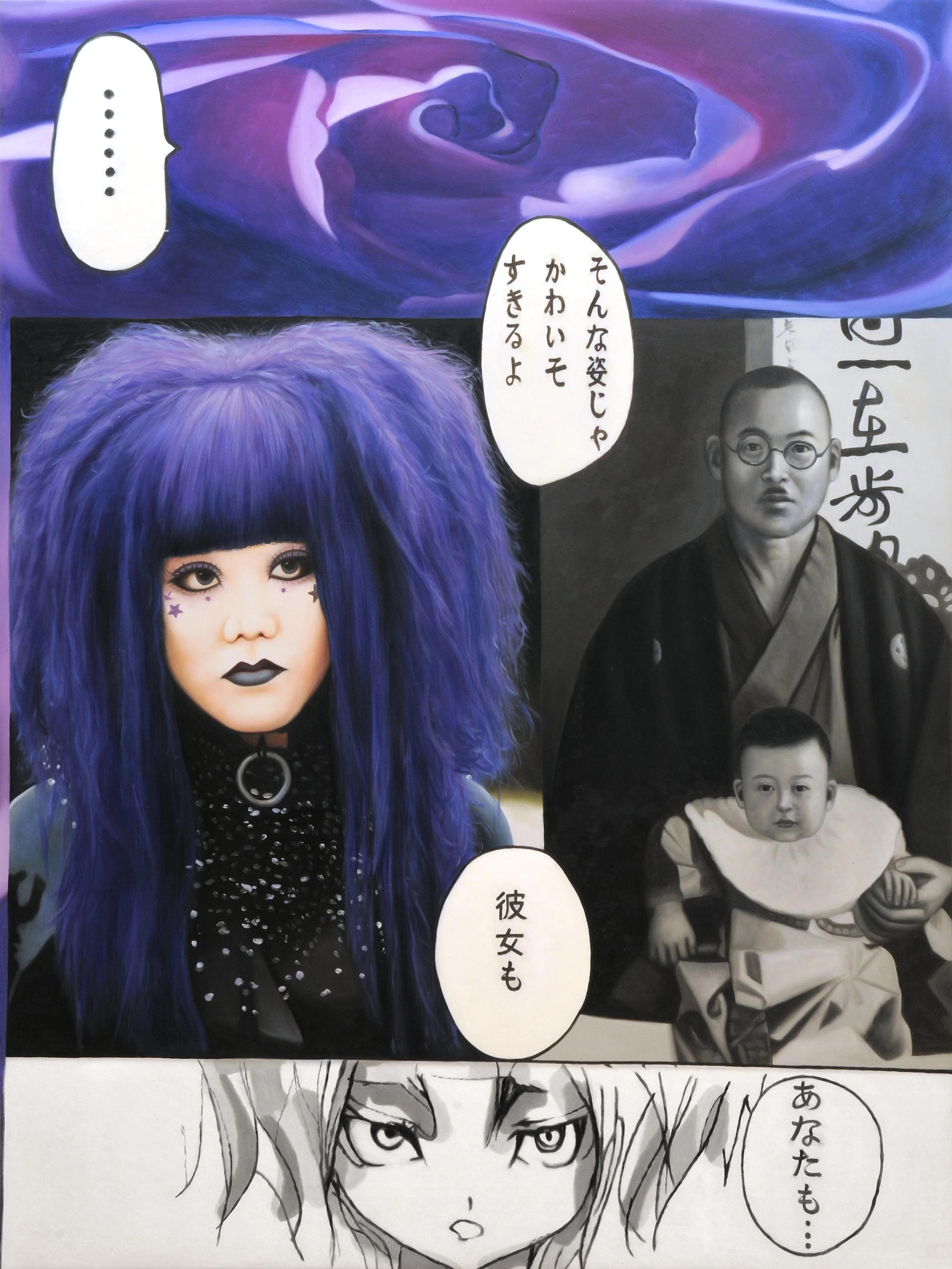


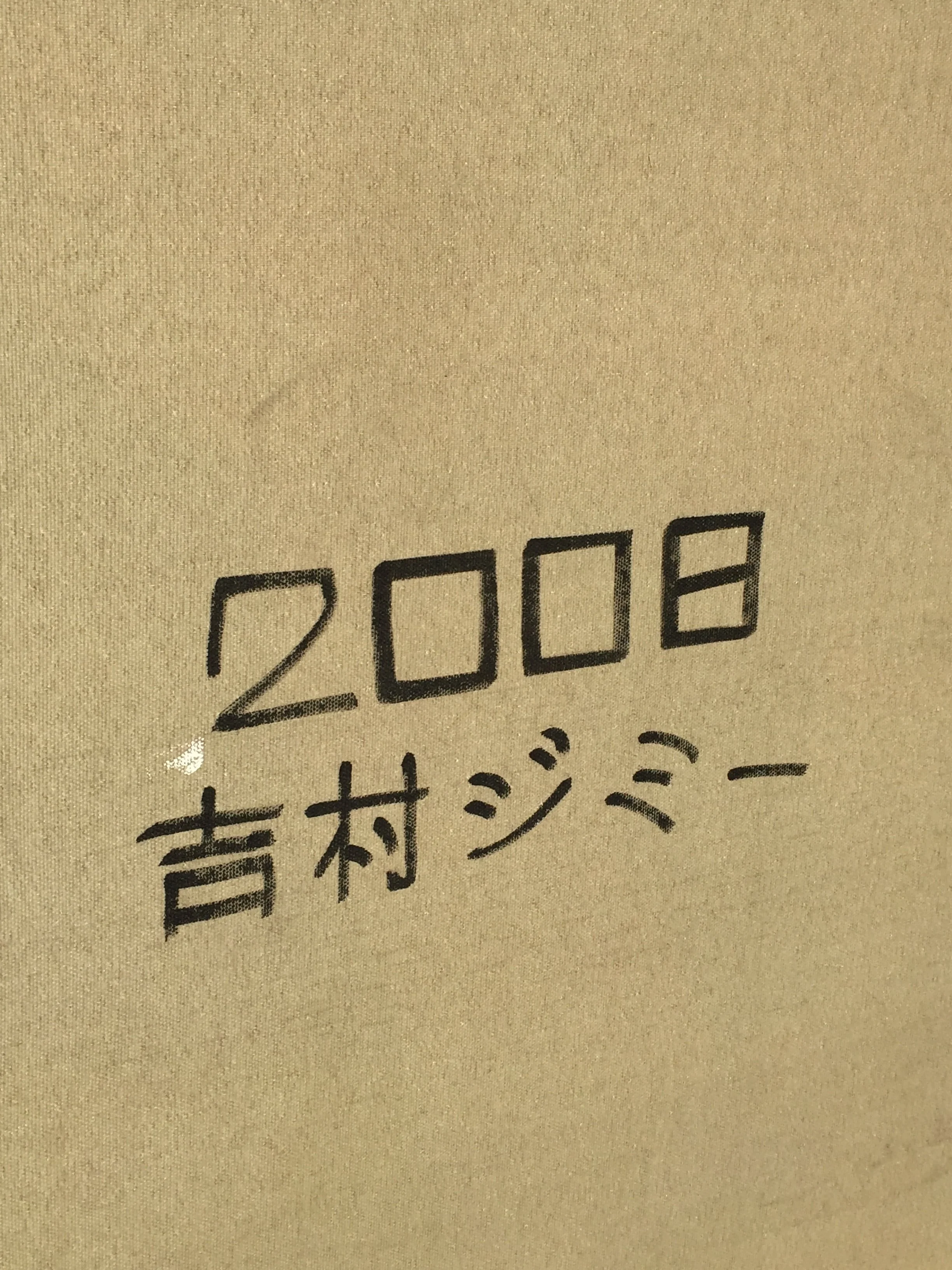
Purple Arlequin: Harajuku Rhapsody, The Enigmatic Dance of Colors is a monumental painting by Jimmy Yoshimura from The Modern Ukiyo-e: Tokyo Tales in Manga Color series. Through a sophisticated fusion of portraiture, manga-inspired imagery, Harajuku culture, and contemporary Japanese aesthetics, the work explores identity as a fluid construction shaped by memory, fashion, and cultural transformation.
At the center of the composition stands a striking contemporary figure whose voluminous violet hair immediately commands attention. More than a portrait, the character functions as a symbolic presence positioned between reality and imagination. Her theatrical appearance recalls both contemporary Harajuku fashion and the expressive visual language of manga culture, creating a figure that embodies transformation rather than fixed identity.
Opposing this contemporary presence, a monochromatic ancestral portrait introduces a historical dimension to the composition. Rendered with restraint and quiet dignity, this figure evokes inherited memory and cultural continuity. Rather than presenting past and present as opposites, Yoshimura places them in active dialogue, allowing multiple temporal layers of Japanese identity to coexist within a single visual space.
The painting unfolds through a fragmented structure that resembles cinematic montage. Distinct visual zones operate like narrative sequences, guiding the viewer through successive emotional and symbolic states. This compositional strategy reflects Yoshimura’s ongoing interest in merging contemporary manga storytelling techniques with the historical narrative traditions of Ukiyo-e.
Purple dominates the chromatic atmosphere of the work. Throughout art history, violet tones have often carried associations with mystery, introspection, transformation, and imagination. Here, the expansive purple field creates a dreamlike environment where memory and fantasy intermingle. The color becomes both emotional landscape and conceptual framework.
The Harajuku-inspired central figure serves as a visual embodiment of contemporary Tokyo. Fashion, self-invention, and individuality emerge as forms of cultural expression through which identity is continuously negotiated and reconstructed. The work reflects how contemporary Japanese youth culture transforms appearance into a powerful language of personal mythology.
Manga-inspired graphic elements introduce rhythm and immediacy to the composition. Stylized features, bold visual contrasts, and graphic transitions reinforce the sense of movement between different emotional registers. These references do not function as simple aesthetic quotations but as integral components of Yoshimura’s broader visual vocabulary.
The contrast between monochromatic passages and vibrant color fields creates a dynamic tension throughout the painting. Historical memory appears contemplative and restrained, while contemporary identity emerges through chromatic intensity and visual energy. This relationship forms one of the central conceptual foundations of the work.
Within The Modern Ukiyo-e series, Yoshimura reinterprets the notion of the floating world for contemporary audiences. Traditional Ukiyo-e concerns with beauty, identity, and social transformation are revisited through manga aesthetics, urban symbolism, and contemporary portraiture. The result is a distinctly modern visual language rooted in Japanese cultural history.
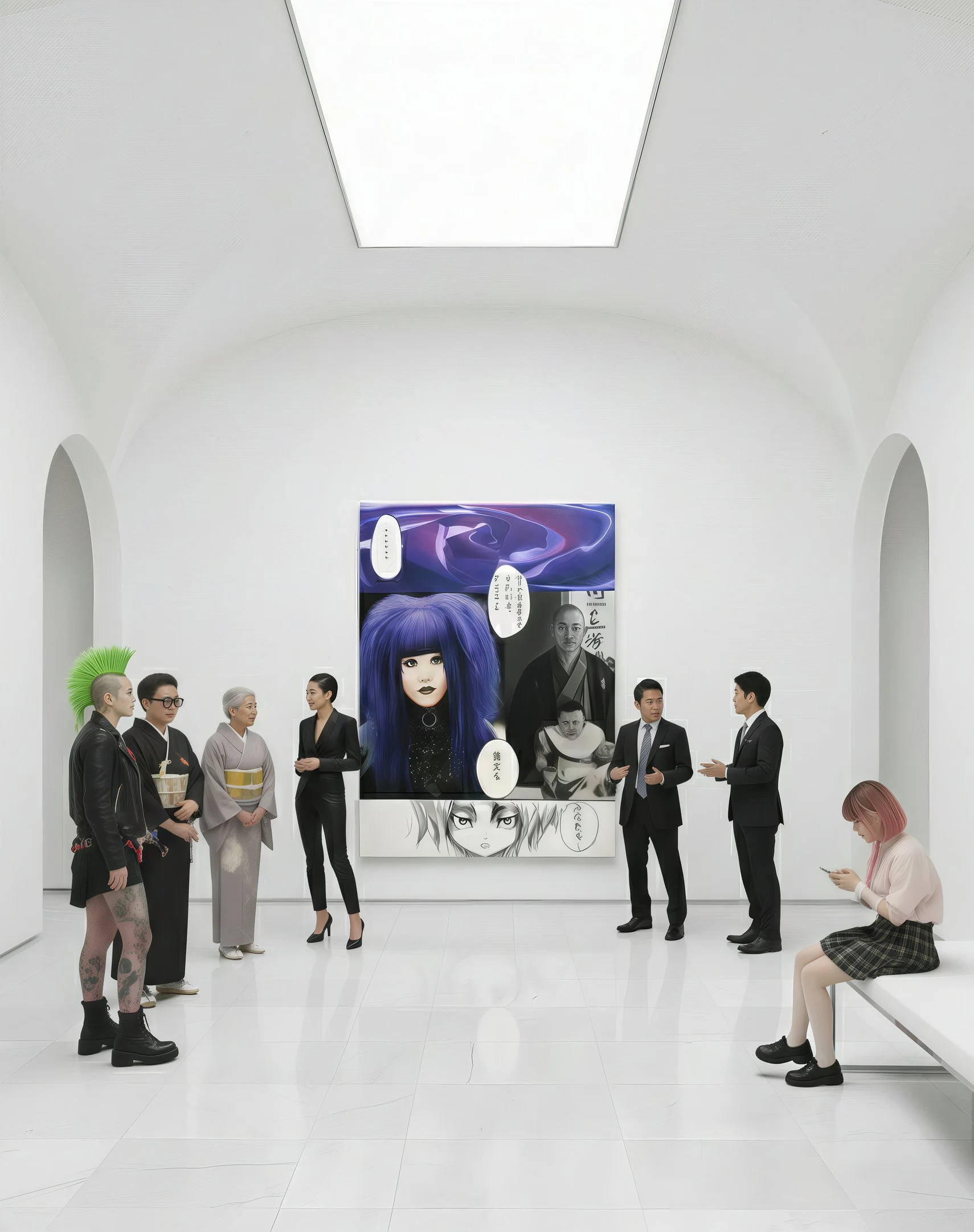
The large scale of the painting enhances its immersive quality. Viewers are encouraged to move through the composition, discovering relationships between figures, colors, and symbolic elements. Each section contributes to a broader reflection on cultural evolution, memory, and contemporary self-representation.
Yoshimura’s technical precision is evident in the seamless integration of realistic portraiture, graphic simplification, decorative abstraction, and contemporary visual culture. Despite its complexity, the composition remains remarkably coherent, demonstrating exceptional control over both narrative structure and pictorial balance.
As a member of Studio CrazyNoodles founded by Hiro Ando, Jimmy Yoshimura occupies a distinctive position within contemporary Japanese Neo-Pop. His work consistently bridges manga culture, historical Japanese aesthetics, fashion, and contemporary urban experience while maintaining strong conceptual depth.
Through its rich purple palette, Harajuku references, fragmented narrative structure, and exploration of identity across generations, Purple Arlequin: Harajuku Rhapsody, The Enigmatic Dance of Colors stands as a significant example of Yoshimura’s artistic vision. Combining contemporary Japanese Neo-Pop, manga-inspired portraiture, and modern interpretations of Ukiyo-e traditions, the work offers collectors a compelling reflection on memory, transformation, and the evolving visual culture of contemporary Tokyo.
Purple Arlequin: Harajuku Rhapsody, The Enigmatic Dance of Colors 2009
Material Oil on stretched canvas
Size 70 9/10 × 53 9/10 × 1 1/5 in | 180 × 137 × 3 cm
Rarity Unique
Medium Painting
Condition Preserved in pristine StudioCrazynoodles condition
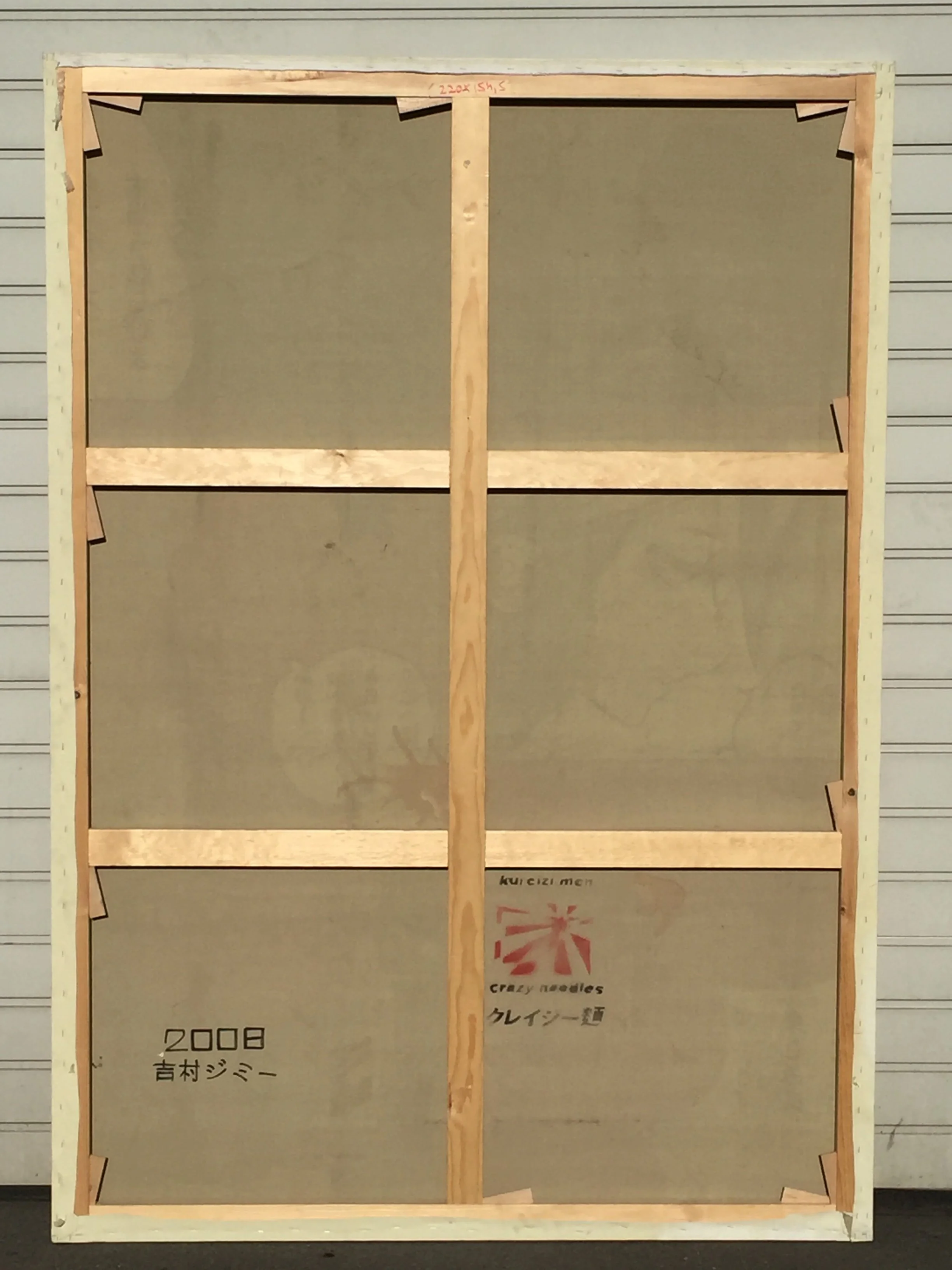
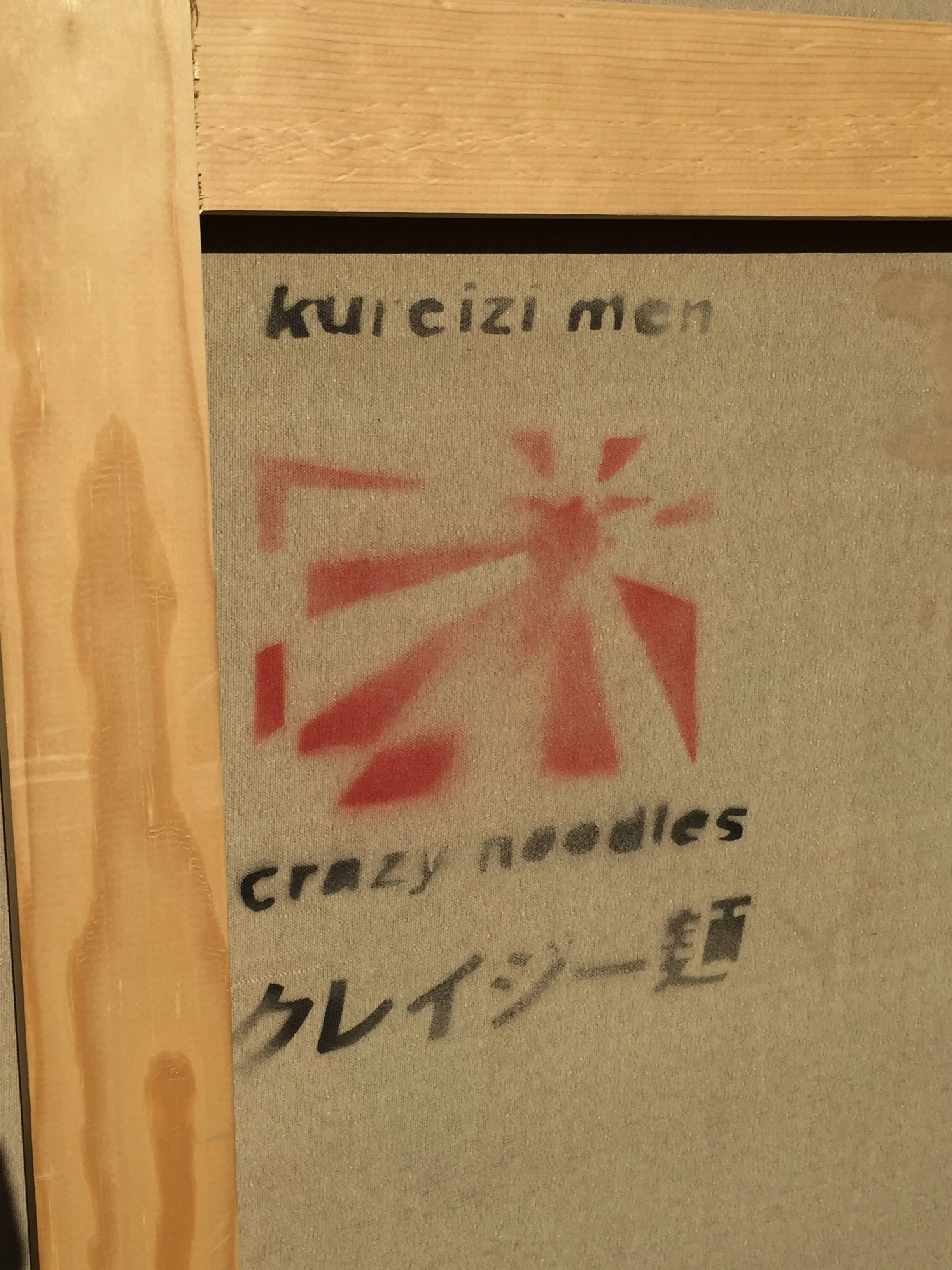
Signature Hand-signed by the artist - StudioCrazynoodles stencil emblem on the reverse - StudioCrazynoodles : Artistic label founded by Hiro Ando
Certificate of authenticity Included (issued by authorized authenticating body)
Frame Not included
Series The Modern Ukiyo-e : Tokyo Tales in Manga Color
Image rights All visual rights reserved by StudioCrazynoodles