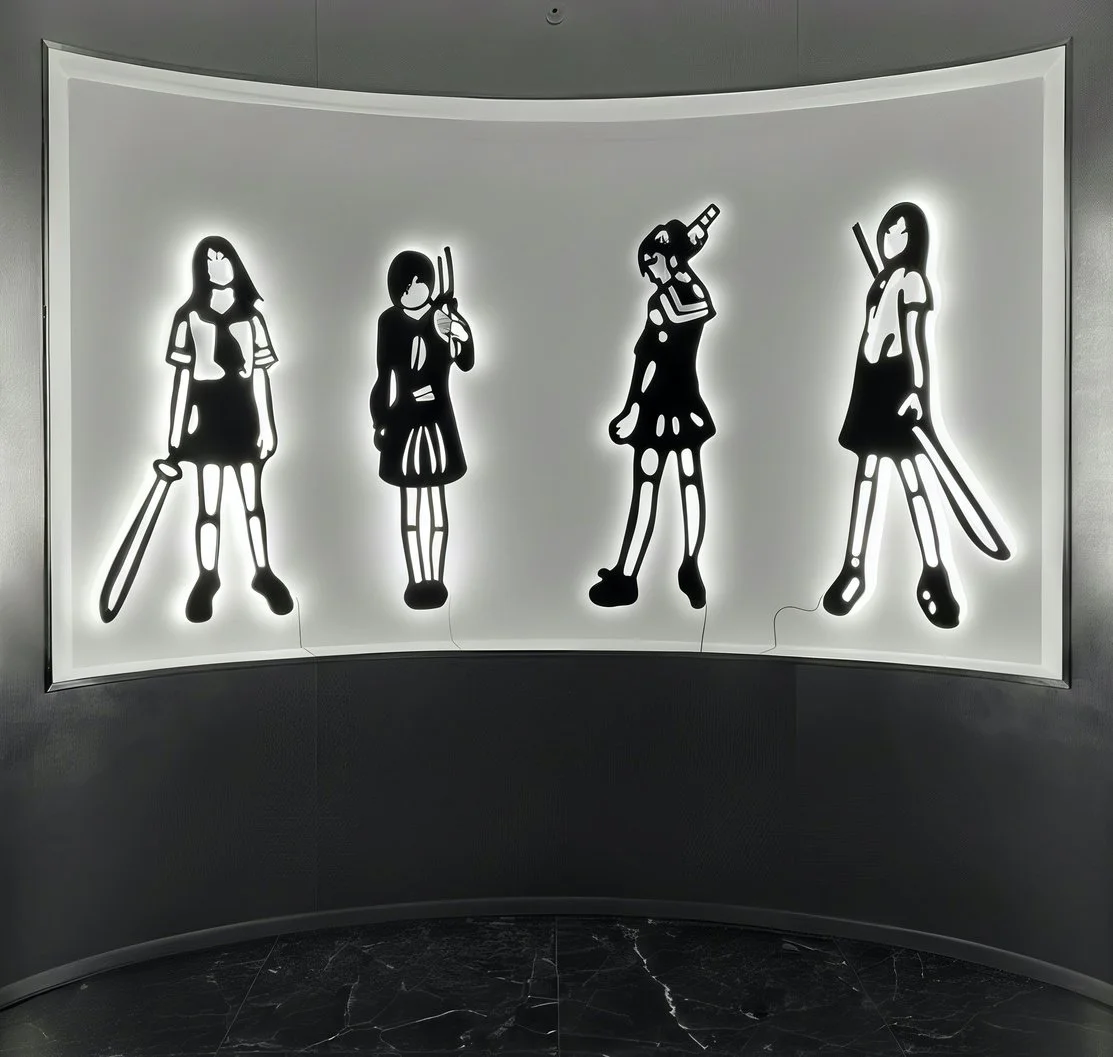
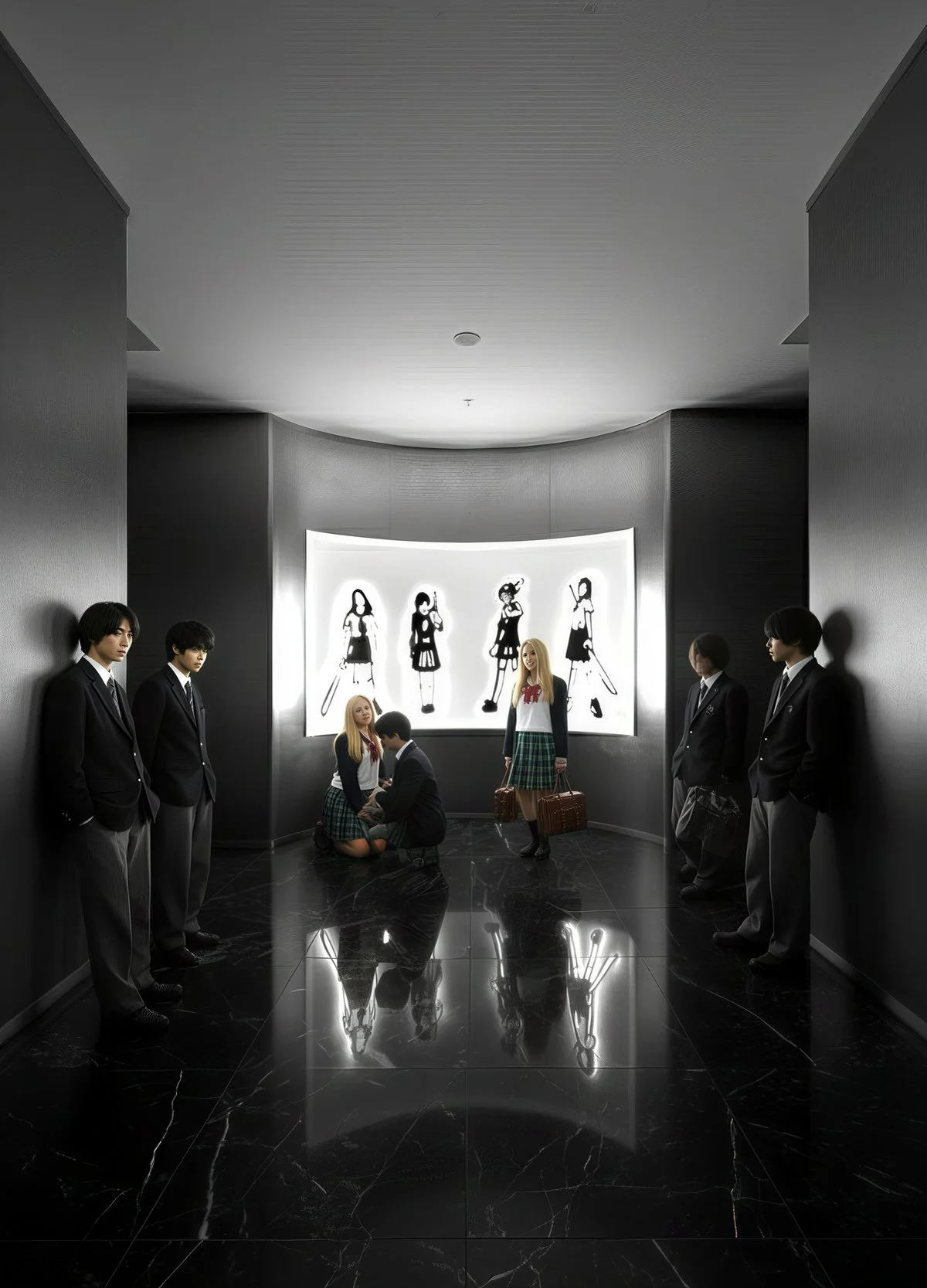
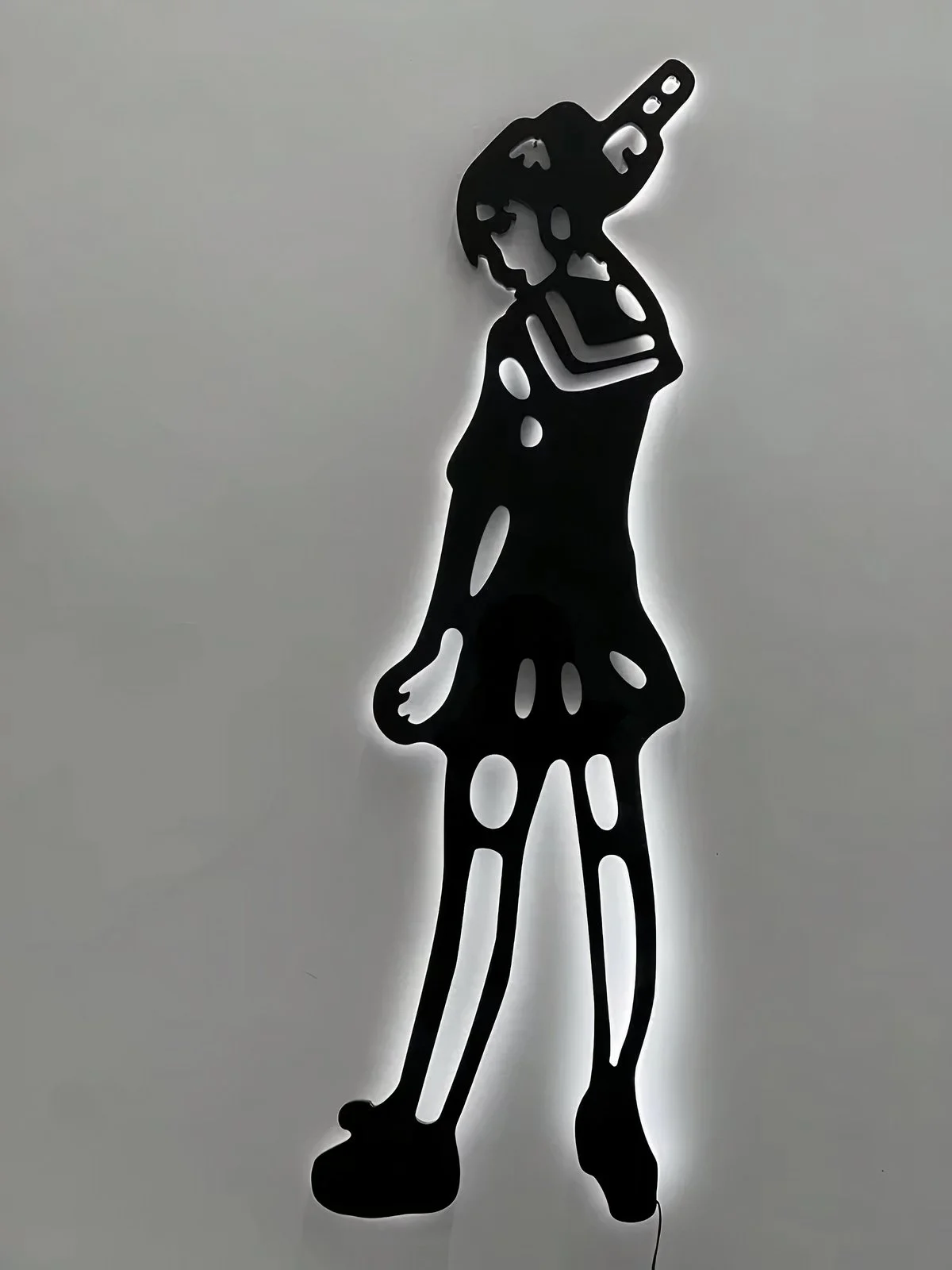
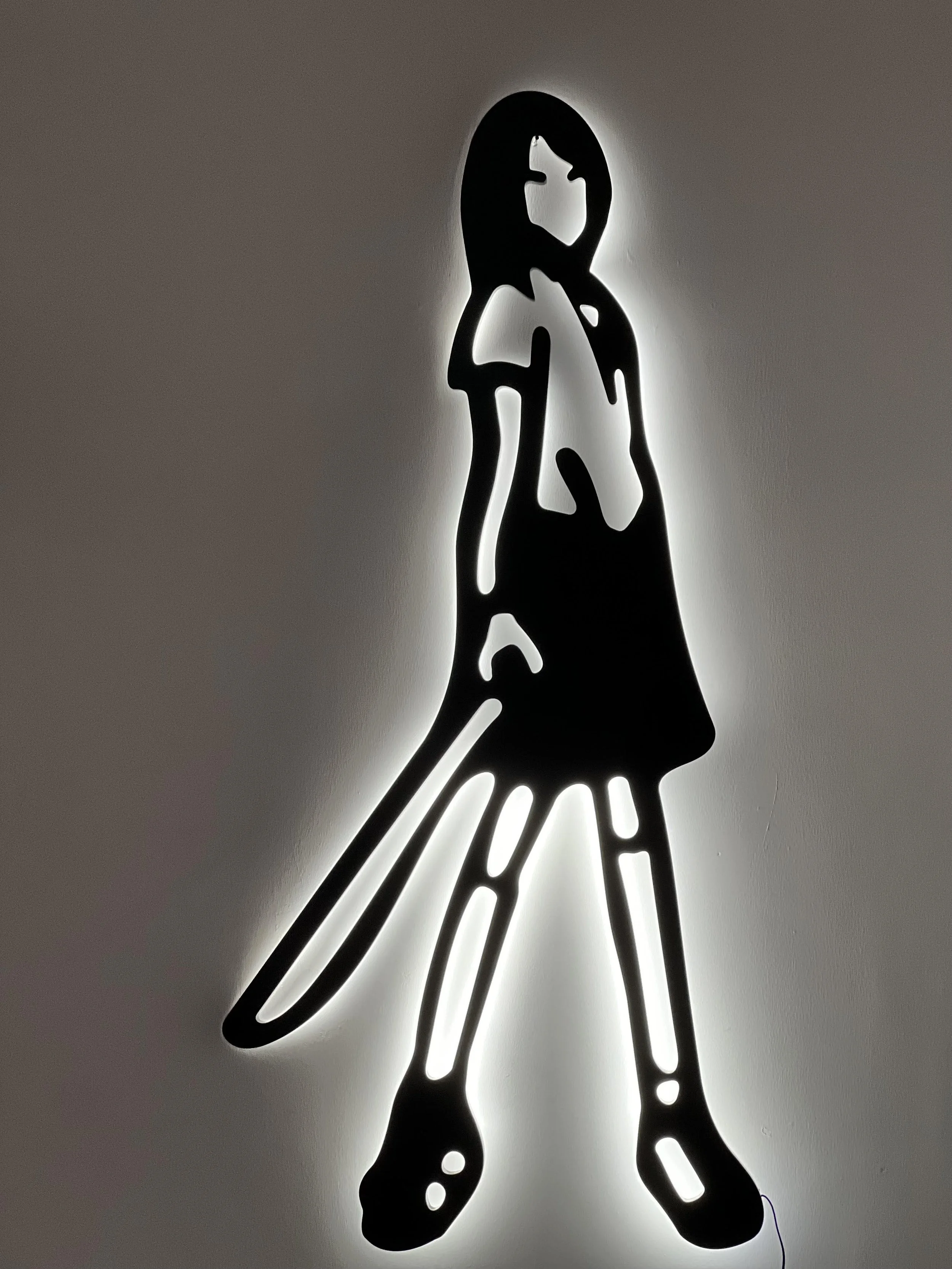
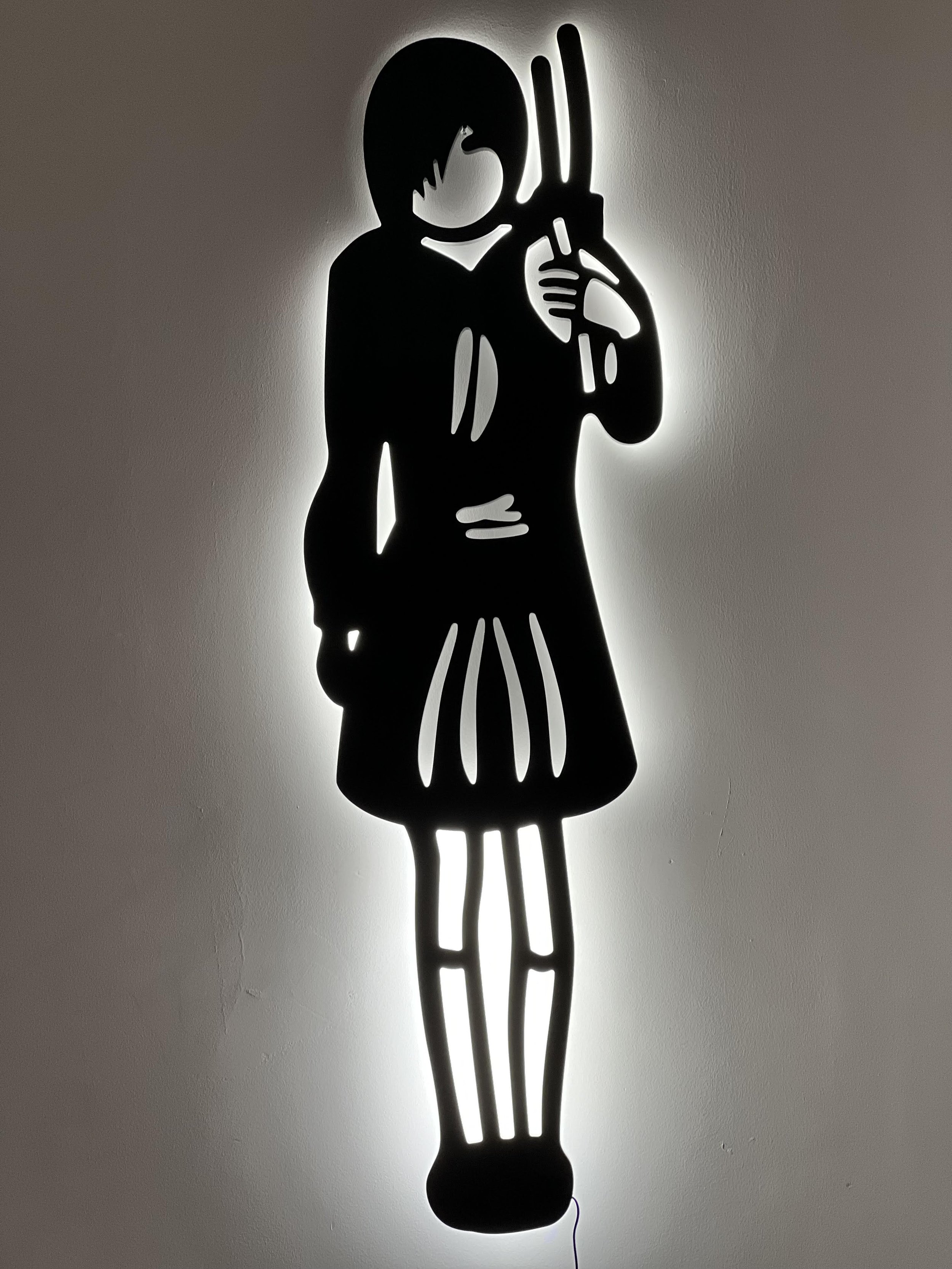
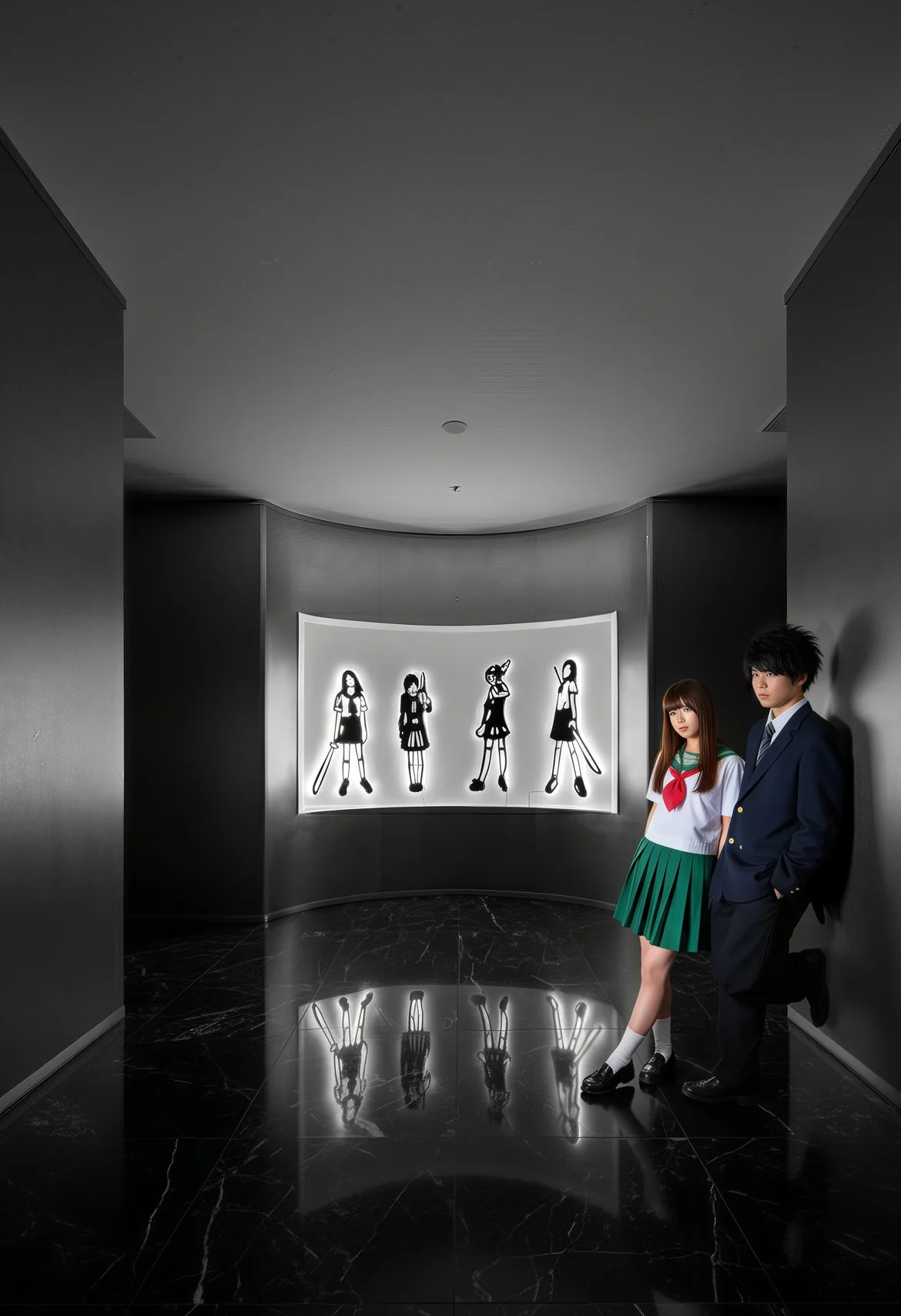
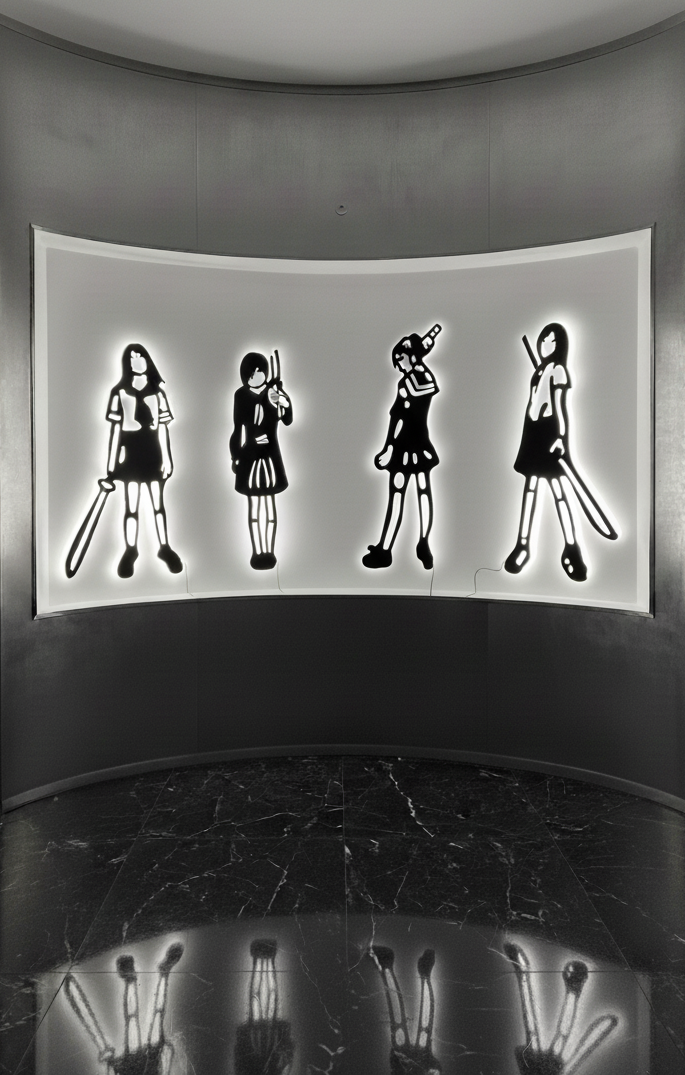
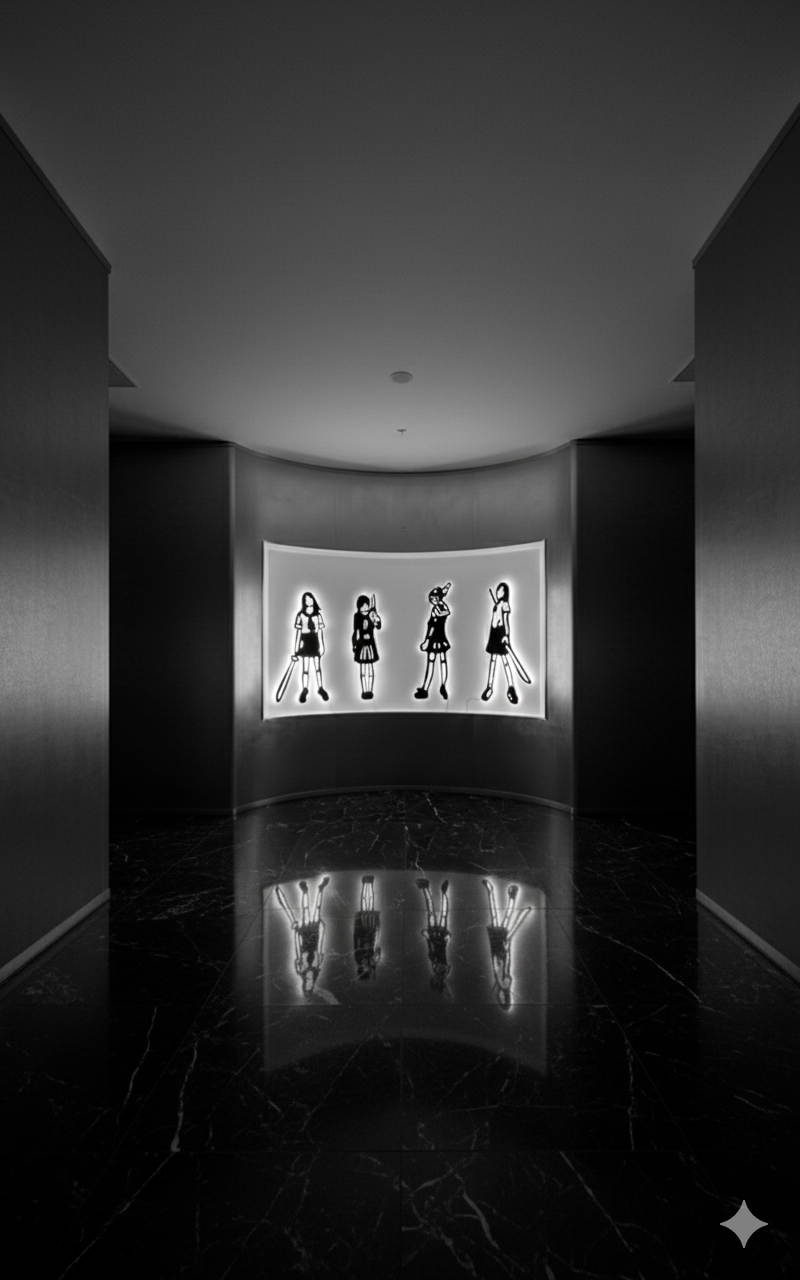
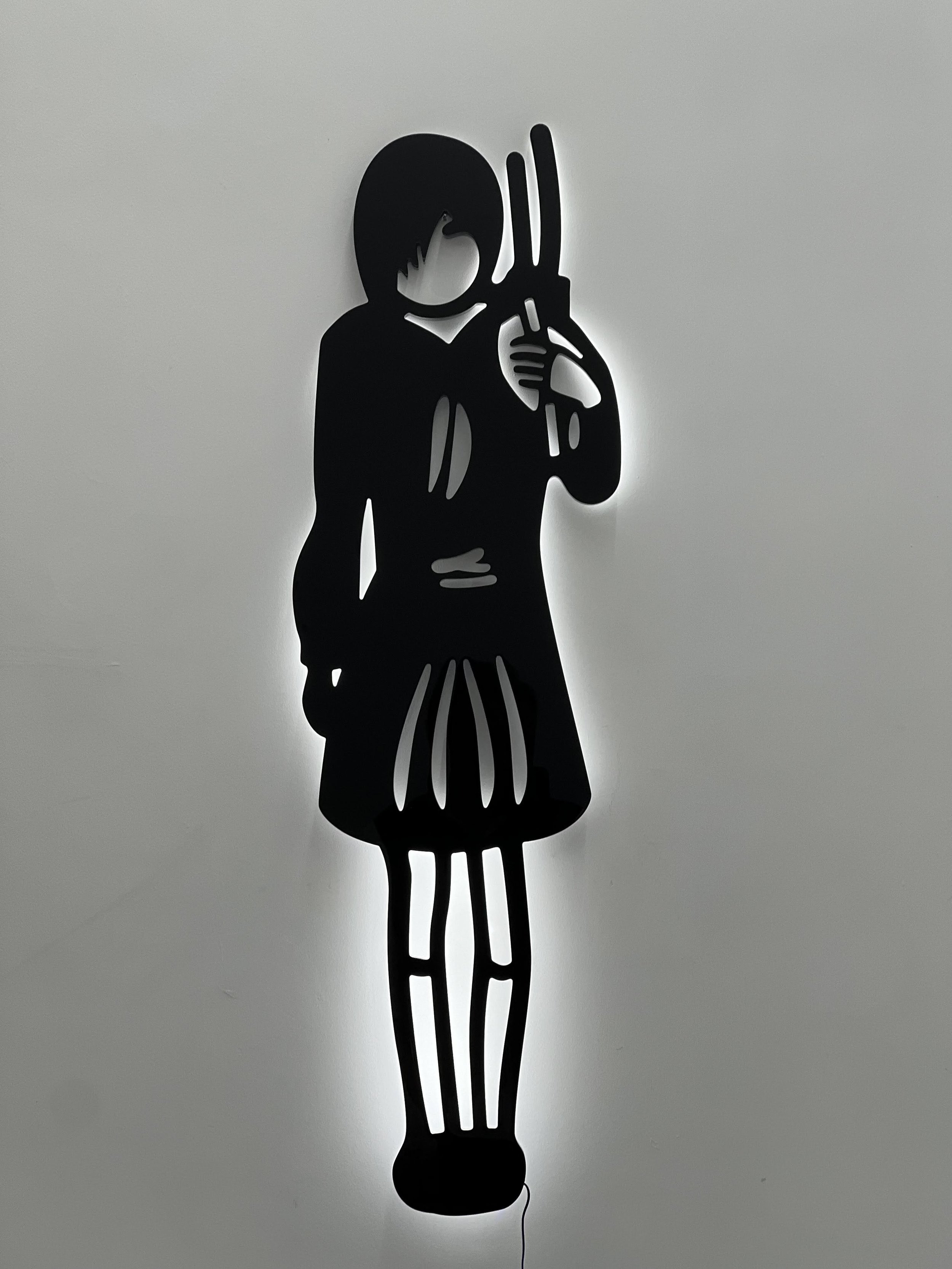
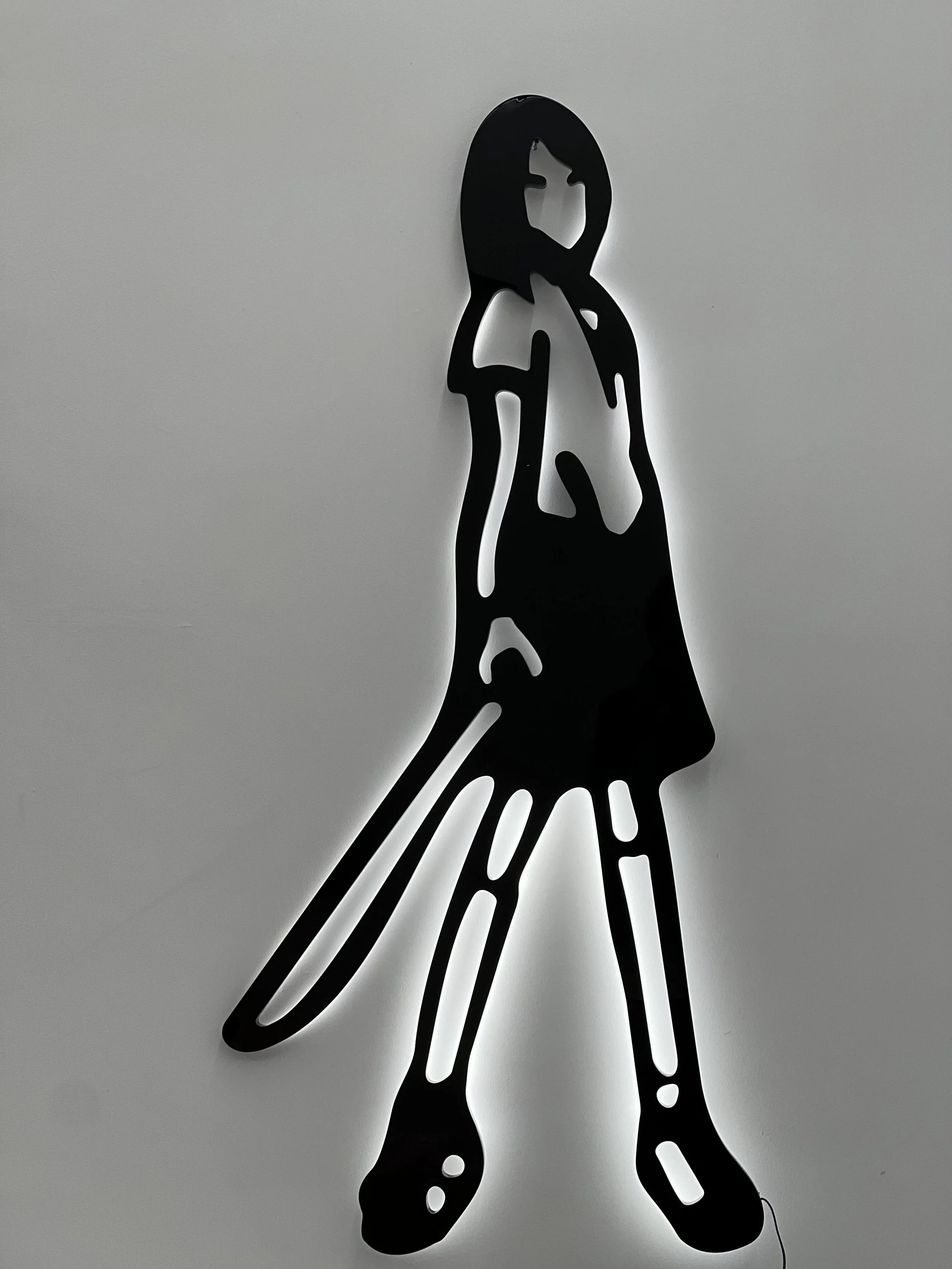
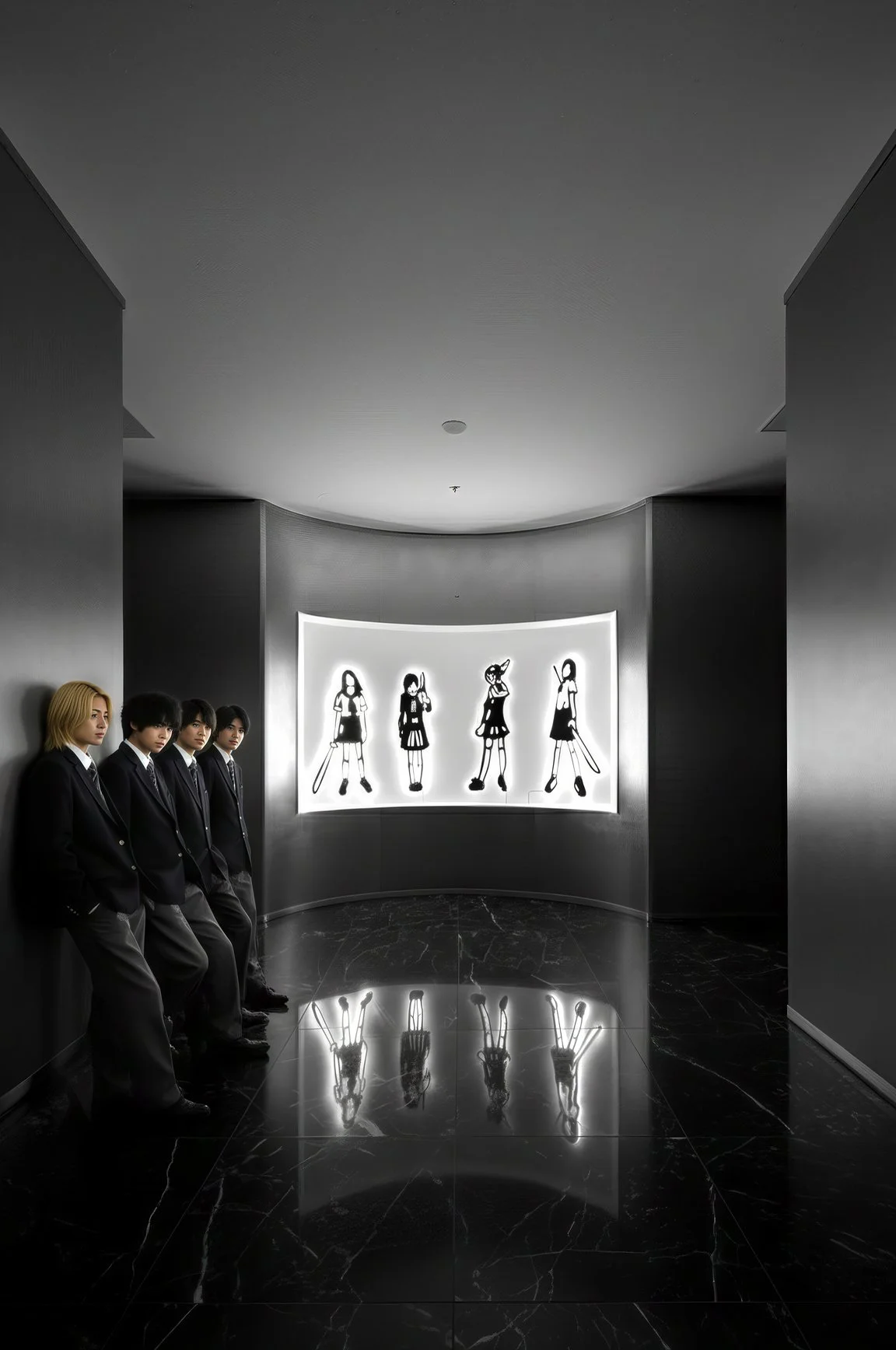
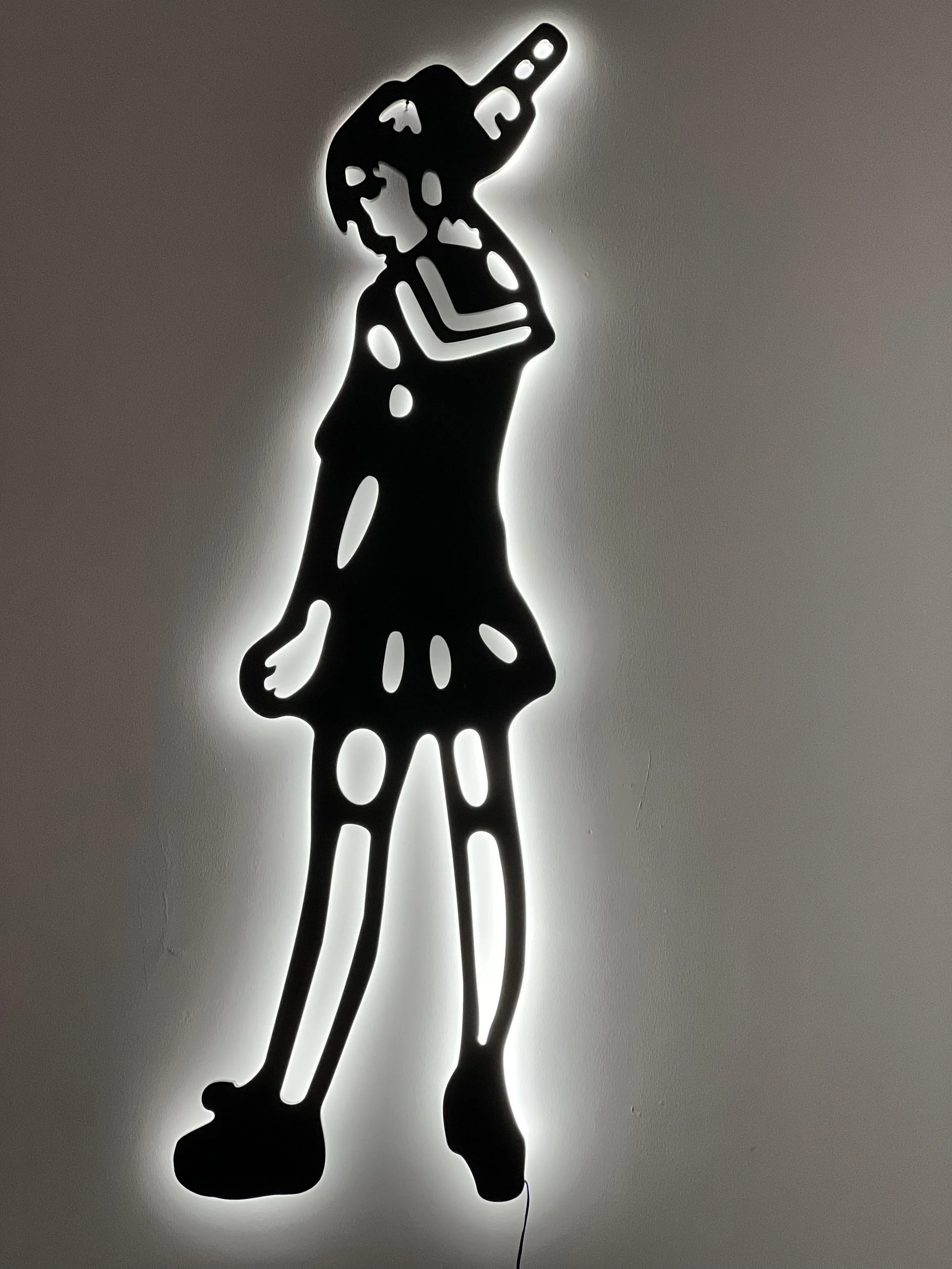
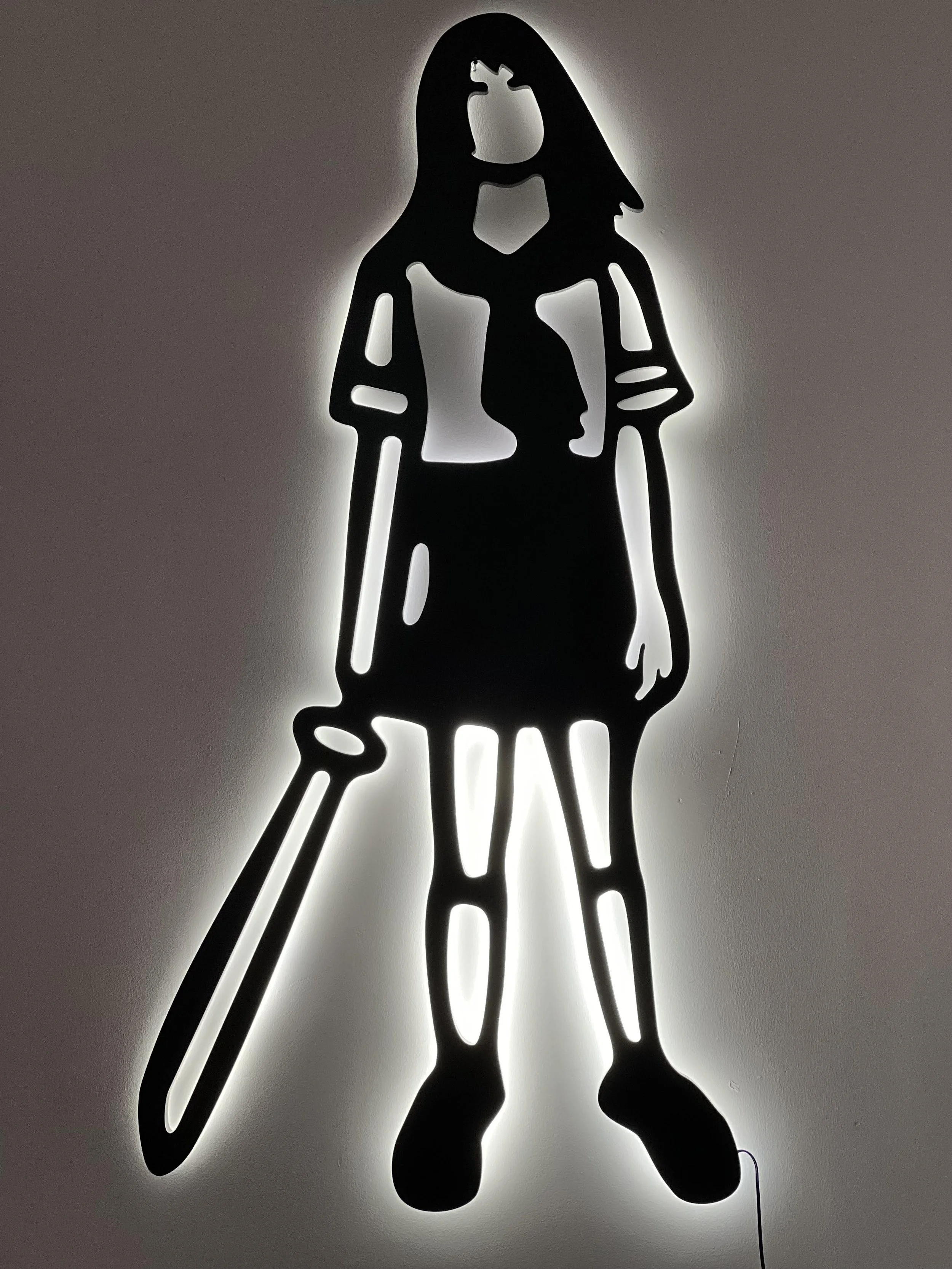
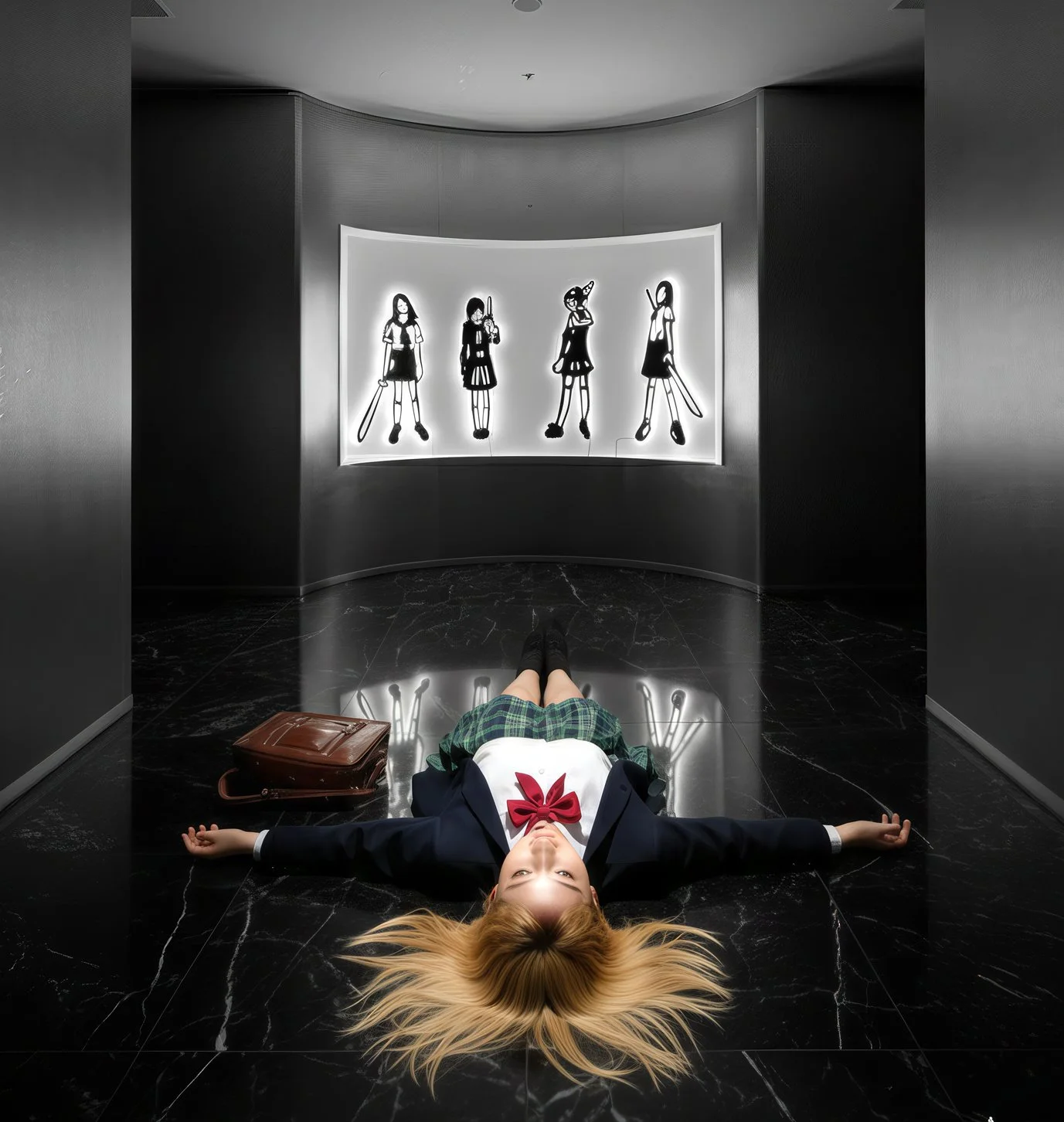
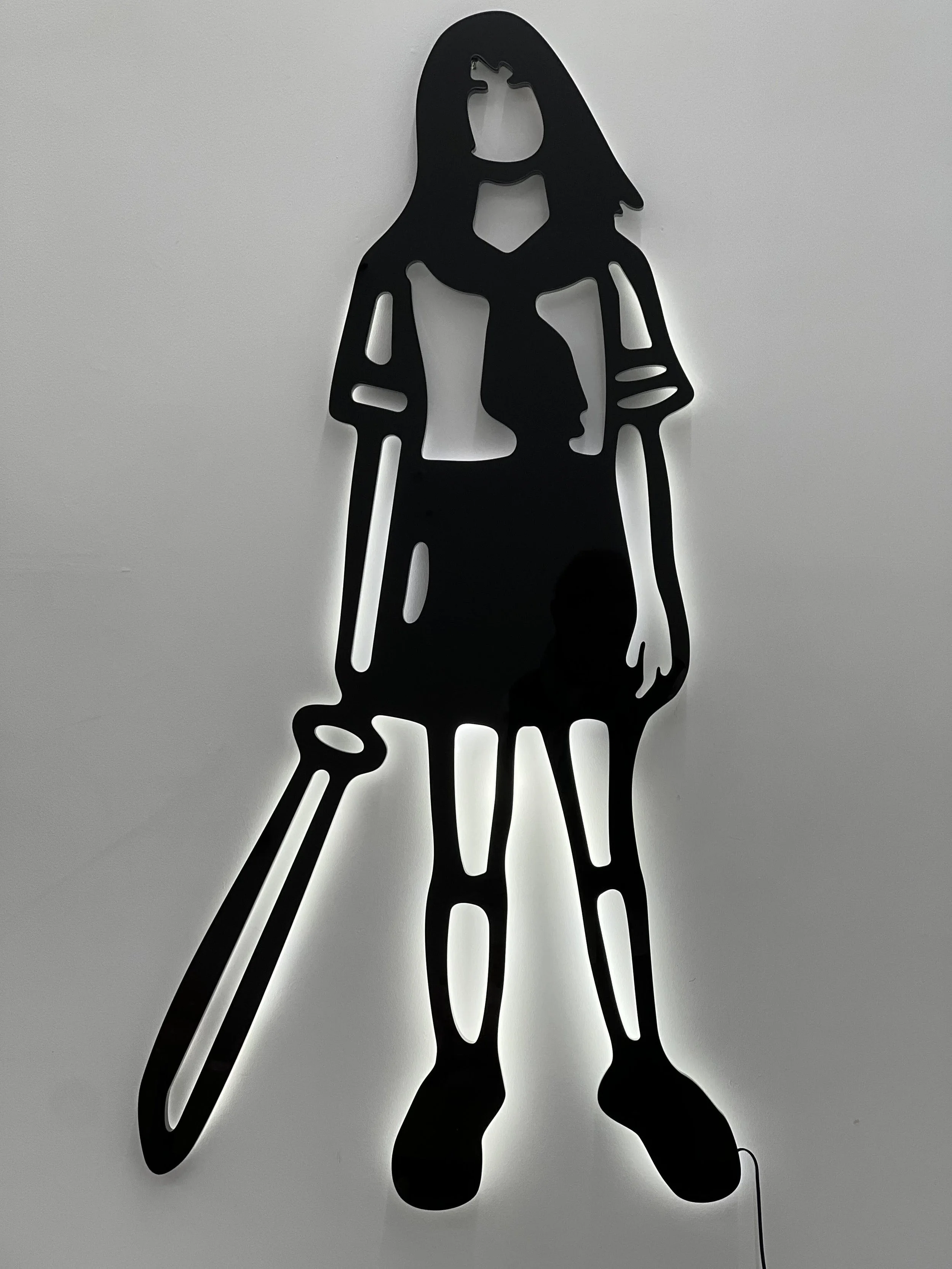
In Shadows at Dawn: Four Schoolgirls, One Silent Fate, Hiro Ando composes one of the most poignant chapters of his Illuminated Schoolgirls Odyssey series, transforming four individual figures into a unified sculptural narrative where light becomes memory and shadow becomes destiny. Cut from black plexiglass and enhanced by subtle LED backlighting, the four schoolgirls appear as monumental silhouettes drawn directly into space, evoking the energetic trace of a bold black marker suspended between drawing and sculpture. Inspired by Koushun Takami’s novel Battle Royale, Ando transcends literal storytelling to extract its emotional essence, transforming these characters into archetypes of youth confronted with fear, isolation, and survival. Each 120 cm figure stands alone, yet together they compose a silent choreography across the wall, suggesting both solidarity and inevitable separation. The luminous halo surrounding each silhouette transforms the wall into an emotional screen where absence becomes more eloquent than presence. Minimalist in form yet charged with psychological tension, the installation reveals Ando’s mastery of Neo-Pop language, merging manga iconography, urban graphic energy, and contemporary sculptural sensibility. The black surface absorbs ambient light while the backlighting releases an inner aura, symbolizing the fragile boundary between innocence and violence, youth and imposed maturity. Within this ensemble, Ando captures the suspended moment before action, when destiny remains uncertain yet already perceptible. The work also resonates with contemporary anxieties, reflecting how today’s youth confront social pressure, competition, and identity quests within an increasingly demanding world. Faithful to Ando’s artistic psychology, gentleness and danger coexist, revealing his fascination with emotional duality and contradiction. The installation transforms the exhibition space into a narrative environment where the viewer becomes a witness rather than a simple observer. Facing the quartet, one senses both collective unity and individual solitude, a universal echo of rites of passage. The simplicity of the silhouettes amplifies emotional complexity, rendering the work accessible while remaining deeply unsettling. Ando’s luminous figures become contemporary guardians of memory, fixing youth at the threshold of irreversible change. This monumental installation represents an exceptional opportunity for a collector to acquire a central work in the artist’s recent sculptural evolution, combining narrative, architectural presence, and emotional power. Through its immersive scale, the work possesses a rare ability to permanently structure museum, corporate, or residential spaces, instantly becoming a signature piece within a major collection. Its importance within the series and Hiro Ando’s growing international recognition further strengthen the patrimonial value and desirability of this acquisition for collectors attentive to the iconic works of their era. To acquire this piece is to integrate into a collection a work destined to become a milestone in the future reading of Japanese Neo-Pop and in the narrative evolution of the artist’s oeuvre. At once sculptural installation and visual storytelling, the work bridges pop culture references and museum presence. Shadows at Dawn confirms Ando’s ability to transform pop imagery into timeless emotional sculpture. Within this silent light, it is not victory that appears, but the fragile humanity hidden behind survival.
Shadows at Dawn: Four Schoolgirls, One Silent Fate, 2021
Materials Acrylic Plexiglass and LED
Size 47 1/5 × 108 3/10 × 2 in | 120 × 275 × 5 cm
Rarity Limited edition
Medium Sculpture
Condition Preserved in pristine StudioCrazynoodles condition
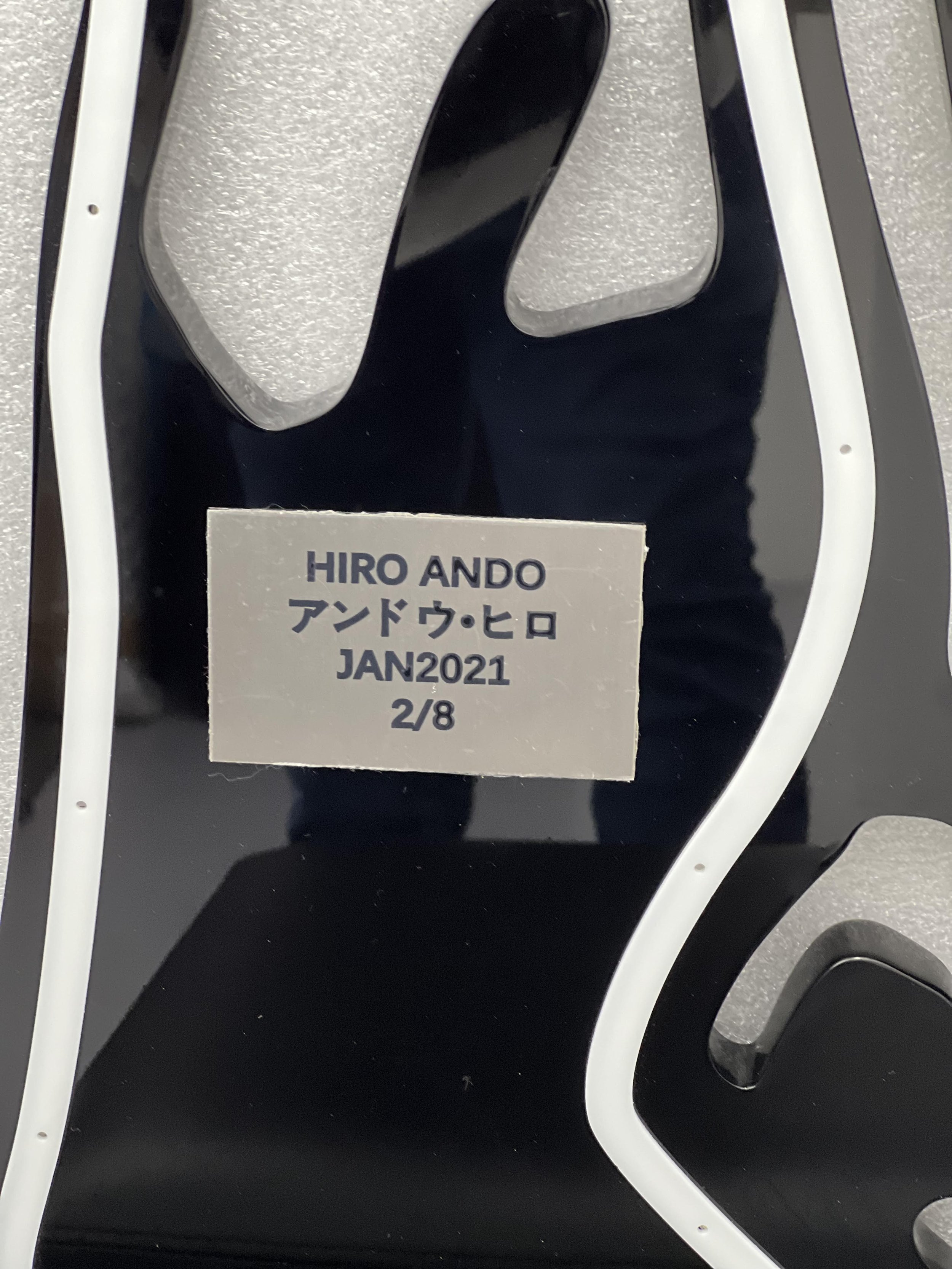
Signature Signed in plate, Engraved metal signature plate affixed to the piece. StudioCrazynoodles production StudioCrazynoodles — Artistic label founded by Hiro Ando
Certificate of authenticity Included (issued by authorized authenticating body)
Frame Not included
Series Illuminated Schoolgirls Odyssey : The Silent Saga of Light and Loss
Manufacturer Designed by the artist and produced by StudioCrazynoodles, the artistic label founded by Hiro Ando.
Image rights A StudioCrazynoodles visual property